There is nothing I love more than being in a place I've never been, and I pretty much just want to go everywhere...
I can't get enough of travelling and sightseeing, so this blog is dedicated to the cool little places I would someday like to go.

Showing posts with label travel. Show all posts

Sunday, April 21, 2013

“Ghost Town” : Bokod, Hungary

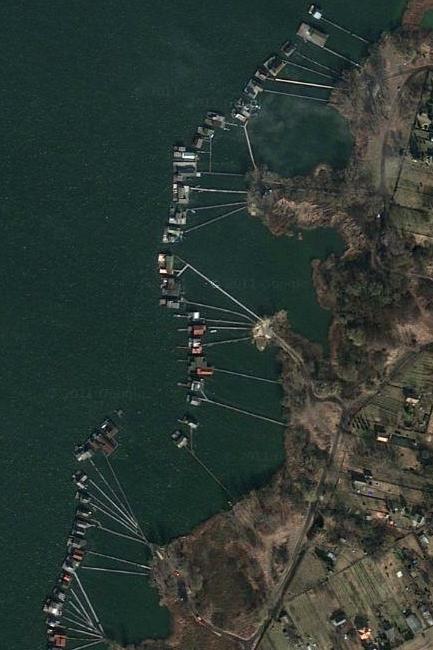
Bokod Hungary is not a tourist destination. It is barely visited – it’s just an old village on a lake. Along the lake shore, rickety boardwalks lead out over the lake to old fishing cottages that stand on stilts. It’s not the nicest location, but I think there’s something enchanting about the photographs, and there is certainly something artsy about the boardwalks and cottages on the misty water.

 
Bokod is a lake about 80 kilometers west of Budapest, the capital city of Hungary. It was hard to find information on Bokod. There was a website in Hungarian, but unfortunately I am not fluent in Hungarian, and google translate was not very helpful…
 
I’m not sure if the lake houses are inhabited – one website reported that they were abandoned but I’m not sure if it was a reliable source. If it is abandoned, I’m not sure if the boardwalks are even safe to walk on. I was disappointed when I realized this, because I saw the picture first and thought the lake houses seemed like a really cool place to stay.
 
Aeriel View
What to do? I probably wouldn’t actually visit Bokod, since there isn’t a lot to do there – just look at the houses and take some photographs I think. If I did, it would be part of a larger trip to Budapest. There are all kinds of things to do an sights to see in Budapest that would make for an excellent trip. I just decided to cover Bokod because it’s such a weird, interesting place, and the pictures are really cool.
 
What to eat? No classy restaurants here guys, this one's a picnic lunch. I'm sure there would be somewhere to eat in the village, but I wasn't able to find any online information.
 
I think Bokod certainly has potential though – if someone were to restore it and make the fishing houses into cottages for rent, it would be a lovely and very cool place to stay. What do you think?

Sunday, April 7, 2013

“The House in the Sea” : Newquay and Cornwall, England

Cornwall, England has always been known for its culture, charm and beauty. Tourists flock to Cornwall to enjoy the warm climate and tranquility of the region, despite the fact that it is fairly removed from most of England’s main tourist attractions.
 
 
Newquay Island is an idyllic retreat off the coast of Cornwall. When the tide is in, Newquay appears to be an island – until the tide goes out, revealing that Newquay is actually a rocky, free-standing outcrop, 70 feet high and surrounded by smooth, sandy beach.
 
Between Tides
When the tide is in, the island can only be reached by a narrow suspension bridge which connects it to the mainland. The bridge was built in 1900 and is wide enough for only one person across (don’t worry – it is checked and maintained for safety every year). I have to say, I would not enjoy dragging my luggage across the suspension bridge.
 
 
There is only one house on the tiny “island,” which is rented year-round to vacationers. The house is surrounded by beautiful gardens until the edge of the cliff drops away, nearly vertically, and the island is surrounded by ocean or by the sand of Newquay Beach depending on the time of day. Stone steps lead down from the island to the beach, which is open to the public.  
 
Low Tide
 The cottage on the island, called The House in the Sea, is a unique home-stay experience. The house sleeps six, has three bedrooms and includes wifi and televison (although why you would bother with that when you could be outside is a mystery to me). Other features of the house are the top deck, which faces out to sea, and the lower deck, which is perfect for sunbathing. The coastal views from the house are spectacular, and watching the sunset from one of the decks would be spectacular.
 
The Conservatory
The House in the Sea is a little more luxurious than the places I typically cover. This is probably not how I would do a trip to Cornwall, since it’s quite pricy and I would prefer a more natural, authentic experience of Cornwall, but I thought it was worth blogging about just because it is so charming! If you could afford it, this would definitely be a lovely get away.
 
What to do? Most of the entertainment around Newquay Island is pretty posh (golf, private surf lessons, etc.) and not really my thing. (Like I said – I prefer to travel in a more down to earth way). The attraction of Cornwall for me is the small fishing villages and the old cottages, so I would love to take a few afternoons exploring the villages, driving the coast and discovering the countryside. Newquay is close to the village of St. Ives, which is a popular destination and known for its charm. You can also walk the cliff-top Camel Trail along the mainland, and get fish and chips at the quay in the village.
 
Camel Trail
What to eat? The house includes a fully equipped kitchen so that you can cook for yourself, and there is also a bar-room. I would also make sure to get a meal in one of the villages for some traditional English pub food.
 
As I said, I would probably never be able to afford this, and this is not really how I would want to experience Cornwall anyways. It’s too removed and aloof for me – I would way rather stay in one of the fishing villages at a little bed and breakfast and explore the county all day. But that’s just me, a lot of people love this kind of retreat, so I thought I’d cover it to give you guys something new. It’s a different kind of travelling in my opinion. But of course, if I was ever offered the chance to stay here, I would not turn it down!
 

Thursday, April 4, 2013

“The Jewel of Crimea” : Swallow’s Nest Castle

Swallow’s Nest Castle is an ornamental castle in the Ukraine, perched precariously on a cliff overlooking the Black Sea. The “castle” is a miniature – only 20 m by 10m, and 12 m high, which only adds to the enchantment. The lonely little house is 130 feet above the surface of the water, exposed to the elements, and looks like something from a fairy tale.
  

Swallow’s Nest has a long and eccentric history. The first building built on the cliff was a wooden cabin, built 1985, which the builder named “the Castle of Love”..... Fifteen years later, a German nobleman bought the land and promptly tore down the “Castle of Love” to make room for the beautiful Swallow’s Nest Castle which is still there today.


Three years later, however, he sold it and it became a restaurant. Throughout the 20’s, the building was used only as a tourist attraction, and in the 30’s it was used by a book club for meetings (awesome for the book club, not so great for everyone else…) After that, however, an earthquake damaged the cliff and the castle was deemed unsafe for visitors, so the castle was closed and empty for about 40 years. There was very little damage to the actual castle, but large cracks had appeared in the cliff. Fortunately, in 1968 restoration efforts began. The cliff was strengthened with concrete and the castle was cleaned up. The castle was fully functional again in 1975. It became an Italian restaurant, and still is to this day.

The castle was built to be decorative, not to protect, and therefore it’s really just a very fancy house. It is literally right on the edge of the cliff – parts of the balconies actually extend over the edge of the cliff, supposedly because a chunk of cliff fell away during the earthquake.

The castle is an architectural marvel: delicate and weightless, but at the same time grand and sturdy (so sturdy that it survived an earthquake 6 or 7 on the Richter Scale with no structural damage). The castle has two stories and includes a main foyer, two bedrooms and a guest room. A stairway climbs to the top of the tower.


 What to do? You can reach Swallow’s Nest by road, or by ferry, which provides a spectacular first view of the castle. The castle is not visible from the road, which adds to the feeling of seclusion. A small fee will get you into the grounds, which you can explore. Inside the castle you should probably have a meal, since it is mainly a restaurant. You can then go out on the decks for a spectacular view of the Black Sea and the distant shore. You can also walk the Tsar’s Path, a nearby scenic trail.

What do eat? I think everyone can figure this one out for themselves… don’t want to be redundant. But I love Italian food, so win-win all around.


Honestly, this place is unreal and I would absolutely love to go here someday. (Apologies for the overuse of pictures but I just can’t get enough of them.) Definitely near the top of my list.

Sunday, March 31, 2013

"Garden Above the City" : Torre Guinigi

I’ve always wanted to go to Tuscany, Italy. The rolling fields and the villas look like paradise, and it always seems so sunny and warm and beautiful. I would love to drive through the countryside on a summer evening and stay in a gorgeous Italian villa (exactly how realistic that is, I don’t know – sounds a lot like Letters to Juliet).


But when eventually travel to Italy, one of my first stops will be Lucca, in Tuscany.


The first thing you see when arriving in Lucca is the massive stone wall that surrounds the town, which was originally built in the 1500’s for defense. It is now a walking promenade around the city for cyclists, locals and tourists to enjoy. Lucca is one of the best places to go for an authentic medieval atmosphere.

 
The town of Lucca dates back to Roman times, and Roman architecture is still visible in the town centre today. During medieval times, Lucca was a centre for trade, especially the silk trade. In the 14th century Italy was full of political turmoil and unrest, so many towns were fortified for defense. Power changed hands many times, but Lucca eventually fell under the control of the wealthy Guinigi family.
 

One of the first things the Guinigi’s did was build a huge tower to show off their wealth. This was a very common pass-time for rich families in that era, they apparently had nothing better to do with their money, and many Tuscan cities actually had to pass laws restricting the height of towers because people were just going crazy. When the families fought each other, knocking down the enemy’s tower was the ultimate burn.
 

Fortunately, Torre Guinigi survived, and today it is a breathtaking tourist attraction. The tower is entirely medieval architecture, except for the stairs, which are a modern addition (the original stairs were on the outside). You can still see the Guinigi family crest carved into the stone. Today, for 4 euros, you can climb the 230 stairs and from the top floor you can enjoy a panoramic view of the surrounding town, including the Roman centre, the original city walls, and a few other towers around the city that are still intact. You can also see the countryside around the town and the Alps in the distance.
 

The cool thing about the tower is that it’s high, but not high enough that you are completely distanced from the city. You can still hear the people in the streets and the musicians that play nearby.
 

 The most incredible feature of the tower is its rooftop garden, which dates back to at least the 1600’s. The garden is 125 feet above the ground, and includes several ancient oak trees.

 
What to Do? There’s lots to see around the town, enough to keep you busy for an afternoon of exploring. Across town from the Torre Guinigi is the Torre della Ore (the clock tower) which is also open to climb. You can visit several medieval basilicas and the Lucca Amphitheatre, whose architecture dates back to the Roman Empire. The Lucca Catherdral dates to the 1300’s and has many beautiful paintings as well as a famous sculpture of St. Martin. I would really just enjoy wandering the streets and exploring. I think that’s the best way to discover a city, and Lucca’s architecture and culture would be absolutely stunning.
 

What to eat? The Tuscany region is known for its delicious cuisine. Around Lucca you can sample the local cooking, including traditional peasant foods like cheese and herb stuffed past, delicious soups, and specialties like roast kid (goat kids) and cold rabbit salad.


Sunday, March 24, 2013

“Venice of the Netherlands” : Giethoorn

The picturesque village of Giethoorn in the Netherlands looks like something out of a fairytale. It’s not Venice, but it is idyllic and uniquely enchanting in its own way. In Giethoorn there are no roads – only canals. There are footpaths along the canals, and beautiful wooden footbridges to cross, but all cars must be left outside the village.
 
 
There are four miles of canals total, lined with beautiful old cottages with thatched roofs dating from the 1700’s. (For anyone who doesn’t know: a thatched roof is a roof made of straw.) Giethoorn has about 3000 residents and most live in cottages on private islands which serve as yards. On foot, many houses can only be accessed by a wooden footbridge.
 
 
What to do? Cycling, boating, guided canal tours – or just explore by yourself and take in the idyllic charm of this little village. You can get around using punts, canoes, kayaks, or “whisperboats,” which run on electrical motors. The canoes are quite shallow, so punting is especially easy (you push your boat along using a long stick). Shops and restaurants line the canals and each has its own dock, so it’s easy to get out and explore wherever you want.


Giethoorn is not a long train ride from Amsterdam, so you could do a daytrip to Giethoorn as part of a larger trip. There are also some excellent B&B’s you can stay in, and the owners are apparently very welcoming and friendly. The B&B’s will often rent bikes and boats so that you so that you can explore the village on your own.
 
In the winter, Giethoorn is a popular destination for ice skating. I think it would be absolutely magical to skate along the canals on a winter evening.
 
 
What to eat? Most of the B&B’s have their own restaurant or dinner service, and will serve you delicious home-cooked food. You can also eat at De Lindenhof, which is pricey but apparently a fantastic experience. De Lindenhof serves five course meals (that’s my kind of dinner!) and the food is creative, delicious and well presented. De Lindenhof is inside a traditional farmhouse and is surrounded by beautiful gardens. De Molenmeester is another restaurant, inside a restored mill, which serves regional organic dishes.
 
The canals can get quite busy as the day wears on, so it’s best to get out and about in the morning or wait until the evening, but no matter when you go Giethoorn will be a charming experience.
 

Saturday, March 16, 2013

“Sacred Blue Cenote” : Cenote Ik Kil

It’s March Break and right about now I’m really wishing I was somewhere tropical. So how about Mexico?
 
Mexico’s Yucatan Peninsula is known for its Cenotes. There are no above ground rivers in the Yucatan – all freshwater is underground in natural caves and subterranean rivers. A Cenote (pronounced “sen-oh-tay”) is a natural sinkhole, formed when the roof of an underground water-filled cave collapses. Cenotes can be open like lakes or almost completely covered, except for a tiny hole at the top. The holes in the roofs allow natural sunlight to filter in, making for an enchanting atmosphere. “Cenote” means “sacred well,” since Cenotes were considered holy by the ancient Mayans, who believed the Cenotes were portals to the underworld and the realm of the Gods.


Cenote Ik Kil
 

There are thousands of Cenotes along the Peninsula, but one of the prettiest is Cenote Ik Kil. Many of the Cenotes are highly developed tourist centres, but in Mexico it’s usually wiser to stick to the well travelled paths.   
 
Cenote Ik Kil is 200 feet across and almost perfectly round. The water surface is about 85 feet below the ground above. A stairway carved into the rock leads down to a swimming platform, where visitors can swim and snorkel in the natural pool. The staircase is lit up beautifully in the evening. The water in the Cenote is very deep. Vegetation hangs in over the edges of the Cenote, including vines which reach all the way down to the surface of the water, and small waterfalls pour over the edges. Apparently there are catfish that live in the Cenote which would really be a problem for me, because I absolutely hate fish… but hopefully I could get over it and just enjoy the Cenote.
 
The Cenote is surrounded by cottages for visitors to rent, a restaurant, gift shop and changing rooms.
 
What to do? Cenote Ik Kil is part of the Ik Kil archaeological park, and is very close to Chichen Itza, a set of Mayan ruins and a very popular site for tourists. Cenote Ik Kil is also very close to Ek Balam, another set of ruins, which I would chose over Chichen Itza because it is apparently much less of a tourist trap and you can actually climb the temple.  
 

Ek Balam

Ek Balam also has its own nearby Cenote, called Cenote Maya. After you explore the Mayan ruins, you can swim and zipline in the breathtaking Cenote Maya, which is quite a different experience from Cenote Ik Kil, since the two are so different geologically.
 

Cenote Maya
 

What to eat? There is only one restaurant at Cenote Ik Kil, so not much choice there… but it is apparently excellent and buffet style, so wahoo!
 
You can also stay at one of the many resorts and take bus tours through the entire area, depending on what kind of experience you are looking for.
 

Thursday, March 7, 2013

“Cave of the Three Travellers” : Fangweng Restaurant

Imagine dining in mid air, hundreds of feet above a sweeping gorge with a beautiful river at the bottom. Cool? Terrifying? This is pretty much what if would feel like to dine in the Fangweng Restaurant, in the Hubei Province of China.

 
The restaurant, also known as "the restaurant near sanyou cave,"  or the "cave of the three travellers," is about 30 minutes north of the city Yichang, in the Xiling Gorge, a scenic range of cliffs and park. The cliffs are riddled with caves and the Chang Jiang river flows through the bottom of the gorge.

 
The entrance to the Fangweng Restaurant is marked by a small building that is pretty darn ugly. The real wonder begins once you pass through the building. To get to the main restaurant, you must take a precarious walk along a boardwalk built into the face of the cliff. The walk is said to be spectacular. On the left, the cliff face goes up almost vertically, and on the right only a small railing guards the boardwalk from the perilous slopes of the gorge and the river below. Historically, the cave was used as inspiration for many famous poets and artists.
 

When you arrive, you will be seated. Most of the tables are inside the restaurant, which is actually a naturally formed cave in the cliff – how cool is that?! The strange combination of being in both a Chinese restaurant and a cave makes for a pretty unique atmosphere. Some tables, however, are on a deck built out over the gorge. I can’t even imagine eating a mean with only a few deck planks between me and a sheer drop to the bottom of a gorge. The view is amazing, but I would be terrified (I’m not good with heights).
 
 
What to do? Well, eat, obviously. The best time to go is during the day, when the restaurant is not crowded, and the light is good for viewing the gorge. Other than that, you can hike, bungee jump, or take a boat tour throughout the valley, among other local activities.
 

What to eat? The menu consists of a combination of local specialties and traditional Hubei cooking. Dishes include freshwater fish, duck, pork and if you’re feeling adventurous, you could try turtle (not for me, personally). Most of the dishes include sauce, vegetables and strong spices.
 

I just think this would be a fantastic and breathtaking (but scary) experience you would never forget, and you would be hard pressed to find another place like this one.

There's not a ton of information on the Fangweng restaurant, but this travel blog covers it pretty well. 

Wednesday, March 6, 2013

"Kapali Çarsi" : The Grand Bazaar


So I originally planned to stay away from places that are super crowded and touristy, but I haven’t done the most stellar job so far, and this one was just too good to resist… so from now on, I’m just doing whatever the heck I want. Some places will be touristy and some will be obscure. Moving on…


The Grand Bazaar in Istanbul, Turkey, is one of the oldest and largest covered street markets in the world. The bazaar has been around since the 1400’s, when Istanbul was the world’s most important trading centre. The market covers sixty streets, all of which are named for the craft they were historically dedicated to, and includes nearly 5,000 shops. The market also houses numerous restaurants and cafes, four fountains, two ancient Turkish baths, and two domed buildings, including the Cevahir Bedesten, where the most valuable items were traditionally sold (and still are today). 

 
The bazaar is a whimsical melding of the Western and Oriental worlds, and has been since the middle ages. It really recaptures the feel of historic Istanbul. You can buy all kinds of unique, eclectic items here, and the pictures look like something out of an I-Spy book. The market is home to craftsmanship at its finest – along with pickpocketing at its finest, so watch out.


 What to do? The market is a labyrinth of streets and shops with many different entrances – very easy to get lost, but I would be happy to get lost exploring all the cool things the market has to offer. It’s crowded, busy and warm – the market is several degrees hotter than the air outside because of all the lights. There are merchants and shoppers everywhere, and colourful, exotic wares spill from thousands of stalls. The bazaar is divided into “Bedestens” – complexes of related shops. The merchants are known for their jewelry, hand-painted pottery, carpets, fabrics, spices and antique shops.

 
The atmosphere can be quite overwhelming, and make sure you know how to say no, unless you’re prepared to blow your life’s savings shopping here. The merchants are outgoing and can sometimes be aggressive. They will bombard you with greetings and offers, and try to convince you/guilt you into to buying their items. Apparently a favourite opener is “Hello, Americans! Where are you from? I have a cousin there!”
 

 Merchants often try to take advantage of people’s politeness, so you need to be firm and sometimes assertive. It’s the only way to get through the market without spending all your money and being constantly stuck in conversations. Just don’t feel like you have to engage everyone who greets you, or buy something everywhere you look. If you approach the merchants with a sense of humour, it can be quite fun –the merchants love to chat, and I’m guessing you’d have some pretty interesting conversations. You could even try your hand at bargaining.
 

It would be well worth your time to check out the district of the Silversmiths. Many of them will be happy to let you inside their workshops if you ask, and you can watch them craft beautiful objects out of silver. Frequently, merchants are forced to move their workshops out of the bazaar because of high rents, which is unfortunate because the bazaar has always held both workshops and shops, and many of the craftsmen believe the soul of the bazaar will be lost if they are forced to move their workshops. Gold is another specialty of the market. Since Turkish currency is fairly unstable, many Turks invest their money in gold, a more secure form of wealth. You will see women in the market whose arms are lined with plain gold bracelets – their life savings.

 
There are cheap touristy areas in the market, and other areas that are very overpriced, but if you go to the outer edge of the market and the streets around the bazaar, where the local Turks shop, you will find good merchandise for good bargains.

 
While you’re in Istanbul, there are plenty of other historic sites and beautiful, ancient mosques to visit.  I could never get tired of exploring this city.

 
What to eat? Try the Kardesler restaurant, a family owned restaurant that specializes in south-eastern Turkish cuisine. Kardesler is crowded but inexpensive, and the atmosphere is welcoming and homey. The food is apparently absolutely delicious. After your meal, if you fancy trying Turkish coffee, Sark Kahvesi (“The Oriental Coffee Shop”) is a short walk away. Turkish coffee is a method of making coffee, not a type of coffee. The beans are hand ground to be extra fine and the coffee is brought to a boil several times. Well prepared Turkish coffee is flavourful and extra foamy. Turkish coffee is served extremely hot with a glass of cold water and goes well with Turkish Delight. A thick layer of sludgy grounds settles at the bottom (don’t drink that…). Traditionally, the leftover coffee grounds were turned over onto a saucer and used for fortune telling.

 
So that’s the Turkish Grand Bazaar. This is only one aspect of the culturally rich wonder that is Istanbul, and I could probably spend forever exploring the Bazaar alone.
 
 
Official Website here. And s/o to Rick Steves for a detailed, street-smart self tour.

Friday, March 1, 2013

"Eldur Og ís" : Laugafell

I’m heading up North for this post, to the “Land of Fire and Ice” – Iceland. As most people know, Iceland’s name is a huge lie. Parts of Iceland are covered in snowfields and glaciers, but Iceland also has hundreds of volcanos and is known for its hot springs. So yeah, the Vikings who named Iceland were huge jokesters.

 
I’ve always loved looking at pictures of Iceland. It’s such a beautiful country – I love how wild and rugged it is, and soaking in a natural hot spring is totally my thing. One hot spring in particular, Laugafell, really caught my eye (partly because it has a name I can actually pronounce, unlike Deildartunguhver…).
 
 
 Laugafell is a mountain in the northern highlands of Iceland, sitting between the glaciers Horsjokull and Vatnajokull. Its western slope is riddled with geothermal hot springs, which are heated by the earth’s mantle. The hot springs are a bit of an oasis, since the highlands can be very barren. Plants and wildlife flourish around the hot springs, which are usually 40-50 degrees Celsius.
 
 
Laugafell has two mountain huts where visitors can stay. The oldest hut was built 1948-1950 and sleeps 15. It is open all year round and is actually heated by geothermic water from the springs. The newer hut was built in the 90’s and is open for use in the summer. It sleeps 20. Both huts have functioning kitchens with gas for cooking and utensils provided. There is a separate third hut which serves as a washroom and showerhouse. The hot spring pools are located just outside the cabins.

 
Just imagine waking up in the morning, stepping out onto the beautiful mountainside and gazing over the highlands all around you. Then you could take a dip in a pool heated by the earth’s core, right in your own backyard, surrounded by wildflowers and gorgeous mountain vistas. Sounds like bliss.
 
 
What to do? Other than soaking in warm geothermal pools (and you would have a hard time tearing me away from that), there are tons of hiking trails all around Laugafell, which lead to other mountains and glaciers and the nearby Eyjafiord Valley. There are gorgeous waterfalls and canyons to visit throughout the highlands, and apparently they raise a lot of horses here, so you could probably do some horseback riding or something.

 
What to eat? You’re pretty much on your own here. You’ve got two kitchens with stoves and “the necessary utensils” (not sure exactly what that includes). Laugafell is 85 km from the nearest town, Akureyri, so you could make a stop there and stock up on groceries before heading up to the huts for your stay.
 

I tried to find some sort of pun about Iceland or something, but they were all pretty bad… So instead, Fun Fact: many people in Iceland still believe in elves and trolls, and many roads are rerouted around places they think are inhabited by magical creatures. Probably makes for some interesting driving.
 
 
There’s not a ton of information about Laugafell, and most of it is scattered in bits and pieces over a bunch of sites, but this one covers pretty much everything.  The English is a little iffy, but I’m sure you can get past that.
 

Thursday, February 28, 2013

"Lights and Linen" : The Paris Déco Off

I've always wanted to go to Paris (who doesn't want to go to Paris?), but Paris is a topic that's way too overdone. Everyone knows everyhing about Paris. So the destination for this post is not Paris. Instead, I’ve chosen a really cool festival in Paris that you probably haven't heard of – the Paris Déco Off.

The Paris Déco Off is an annual five day festival that takes place in January. More than 60 designers participate in the Déco Off, setting up show rooms on the roads along both sides of the Seine.

The festival really comes alive on the Soirée Nocturne, when the festival is open late into the night. The Left Bank and the Right Bank each have their own Soirée on two separate nights. The Rue du Mail, a main street on the Right Bank with several designer shops, is decorated with a string of gigantic lanterns, whose shades are made from linen provided by various European designers. The result is an enchanting display of light and colour, illuminating the entire street.
I added the the Déco Off to my blog because I love festivals and I love the pictures of the linen lanterns. It's so simple but so pretty, and I feel like it would be a really fun atmostphere for exploring and walking around. Of course, I would make sure to hit up the rest of Paris while I was there...but the Déco Off is just something fun and unique I'd like to try.

What to Do? There is much to explore at the Déco Off. Visitors can browse displays and collections of furniture, lighting and fabric from the most prestigious international designers. For entertainment, there are films and shows, and a variety of bands play in the Paris Déco Off Concert.

What to Eat? There are plenty of restaurants in the surrounding streets – and we all know how good French food is. Do I need to say anything else? Have a baguette or some Escargot or something.

For lack of a fun fact (I’m sure everyone is real disappointed), I have a fun travel quote:

“Men read maps better than women because only men
can understand the concept of an inch equaling a hundred miles.”
                     - Roseanne Barr

Wednesday, February 27, 2013

"La Merveille de L'Occident" : Mont Saint-Michel

Has anyone seen the movie The Woman in Black? If not you should, it's pretty good. But anyways, in the movie, Daniel Radcliffe is a lawyer and he gets stuck overnight on this creepy island you can only reach when the tide goes out. Pretty scary. But what's cool is that there's basically a real life version of this island, and it's open for business.


Mont Saint-Michel is a rocky island in Normandy, off the coast of North-Western France. The Mont has held a fortress since early medieval times and also served as a monastery. Today, 44 people live on the island. 

Mont Saint-Michel at twilight

Mont Saint-Michel is a tidal island, which means it can only be reached at low tide. Originally, the road that led to the island was covered during high tide, and the island was completely isolated.  Nowadays there is a raised causeway, so the Mont is always accessible, but it is still very dangerous to go out into the bay alone, because the tide changes very quickly.


I actually wish there was no causeway, because call me crazy, but the idea of being stuck on the island between tides sounds totally thrilling to me. Kind of creepy, but really cool. What I love about the island is the haunting architecture, and the idea that people have been coming to this island and staying in this building for centuries, doing the same things that people are doing here today.


Mont Saint-Michel consists of a Gothic style abbey and the village that was built around it, both of which date back to 700 AD. The abbey is an artistic and architectural feat, and its rugged walls and delicate towers almost seem like a natural part of the island.


What to do? There are several hotels around the entrance to the causeway, as well as within the walls of the Mont. The village’s main street, the “Cour de l’Avancé,” has original historical buildings and shops which sell food, jewellery and other souvenirs in the tradition of medieval shopkeepers. You can visit the Abbey and the Parish Church, which was built in the 1400’s. Classical concerts are frequently hosted in the Abbey. There are four museums on the island, covering the history, culture, archaeology and ecology of the island. Rates are reduced for non-European young adults (score).


What to eat? Salt meadows surround Saint-Michel, and are used for grazing sheep. Apparently, the salty diet of these sheep gives their meat a unique flavour. “Agneau de pré-salé” (salt meadow lamb) is a local dish that can be found in the island’s restaurants. I’ll have to pass, since I’m not a huge fan of lamb, but other specialties include omelettes and seafood from the bay, which can be enjoyed at numerous restaurants within the walls.


According to Wikepedia, Mont Saint-Michel was the inspiration for the city of Minis Tirith in the Lord of the Rings. I thought that was pretty neat. (Apologies if you have no idea what I’m talking about.)

Monday, February 25, 2013

"Terra Delle Sirene" : The Amalfi Coast

So it’s been nearly impossible to choose what to write about first (which is why I’m doing this now and not a week ago, when I should’ve started…) but since Italy is pretty much the top of the top on my travel bucket list, I’ve decided to start there.


The Amalfi Coast is known as one of the most scenic coastal regions in the world. On the Western coast of Italy, the region can be accessed from land by only one road, and includes 13 picturesque towns. Mountains, cliffs, beaches and the sea combine to form a unique and stunning landscape. In his poem “Odysseus,” Homer described Amalfi as the "Land of the Sirens.”
Colourful houses cling to the cliffs, with a 500-foot drop to the Mediterranean Sea and sandy coves below. It’s the houses that got me hooked on the Amalfi Coast – they are so charming, and this is exactly what I picture when I think of the Mediterranean sun and sea.

 
What to Do? Shopping and eating along the Coast is apparently pricey, and since I’ll probably be a poor student, I’d most likely stick to a day trip. The towns are charming, steeped in history, with shops, villas and beautiful views, but the biggest attraction for me is the scenery. The bus ride along the coast is apparently breathtaking (and somewhat scary - but that's ok, a little adventure never hurt anyone). The bus ride would be the best part of the trip for me (never thought I’d say that), and I’d also make sure to hit the beaches and explore a few of the towns.


The towns are know for the exquisitie architecture, especially the village of Positano, pictured above. Positano is pretty much a vertical town, and has stairs instead of streets. How cool is that?

What to eat? Lemons. The Amalfi region is known for cultivating lemons, which grow in terraced gardens all along the coast. The Lemon Festival happens every year in September, and the towns take turns hosting. I didn't know there were multiple types of lemon, but apparently the festival exhibits every kind available. You can sample all kinds of lemon delicacies, too, like the region’s famous limoncello liqueur.


So that’s the Amalfi Coast for you in a nutshell. And fun fact – Beyonce mentions the Coast in her song “Upgrade U.” Beyonce knows what’s good.